

 ) or https:// means you’ve safely connected to the .gov website. Share sensitive information only on official, secure websites.
After You Get Your New Passport
Learn about your new passport and tips for travel abroad.
Your passport must have 6 months of validity for travel
- Some destinations require that your passport be valid at least 6 months beyond the dates of your trip. Some airlines will not let you board if this requirement is not met.
- If you were age 16 or older when we issued your passport, your passport is valid for 10 years.
- If you were under 16 when we issued your passport, your passport is valid for 5 years.
Find the issue date of your passport on the data page of your passport book or on the front of your passport card.
Check Travel Advisories for the places you plan to visit to learn about valid passport rules and other requirements.
Sign your passport
How to sign an adult passport
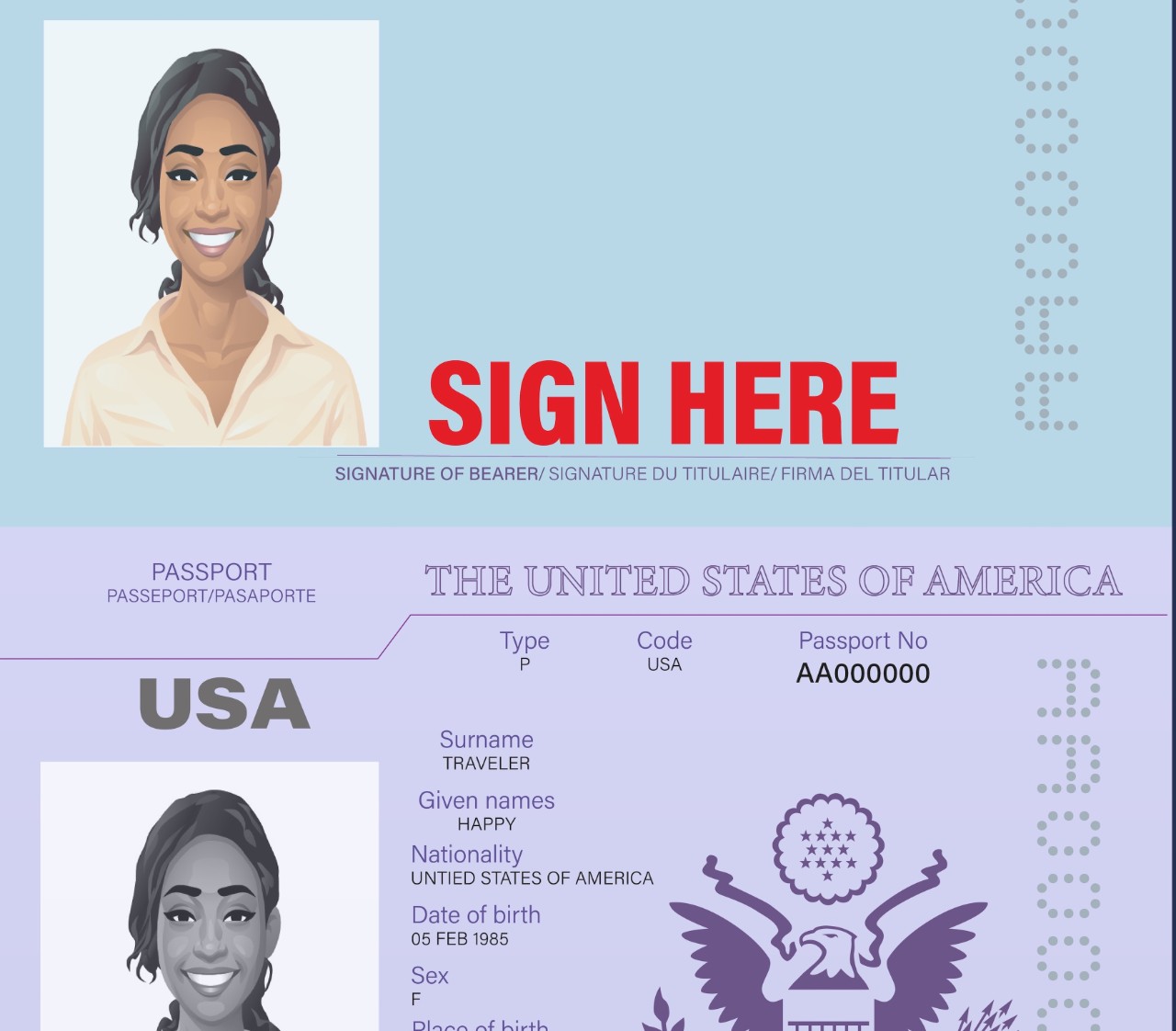
You must sign your full name in blue or black ink inside your passport.
How to sign a child's passport

On a passport for a child under 16, a parent should print the child's full name on the signature line. The parent should also:
- Sign their name next to the printed name of their child
- Note their relationship to the child, such as mother, father, or guardian
Receive your supporting documents
Now that you have your passport, we will return your supporting documents in a separate mailing. If you provided an email on your application, we will send you an update so you know when we mail back your documents.
We will return your supporting documents by First Class Mail to the mailing address you listed in your application.
- These documents include a previous passport, birth certificate, or naturalization certificate.
- You can expect to receive these documents up to 4 weeks after your passport book or card.
If you have been waiting more than 4 weeks for your documents, dial 877-487-2778 to report it.
If you want us to reimburse you for a lost supporting document, you must contact us within 120 days of the date when we mailed your passport.
Protect your passport
Your new passport is secure and durable, but you should still take steps to protect your passport and avoid damage. If you have a damaged passport, it may get rejected by airline or border officials and delay your travel.
Check for any active visas in your old passport
After you apply for your new passport, you cannot use your old passport for travel. If you have a visa in your old passport that you need for travel, check with the foreign embassy or consulate that issued the visa to see if you can still use it.
Update your Trusted Traveler information (Global Entry, NEXUS, SENTRI)
The Department of Homeland Security's Trusted Traveler programs speed up processing at U.S. airports and international borders.
Update your Trusted Traveler account information with your new passport number, the date we issued it, and the date it will expire.
Use your passport’s QR code to stay up to date
We are including QR codes on new passport books to give you easy access to this webpage and help you stay up to date with travel tips and guidance.
The QR code is:
- The same on all passport books,
- Does not have personally identifiable information, and
- Does not change the way border officials, airlines, and others review your document.
Passport cards do not have QR codes.
Stay informed when you travel abroad
-
Review travel tips and guidance about your destination, such as entry requirements and local laws.
-
Find travel checklists and guidelines for what to do if you experience a life event or emergency while you’re abroad.
-
Enroll for alerts from the U.S. embassy about safety and security, travel advisories, and messages about embassy events and services.